Clinical reasoning
Teams work through anesthesia crisis scenarios, recognizing key cues and making decisions as the situation evolves.

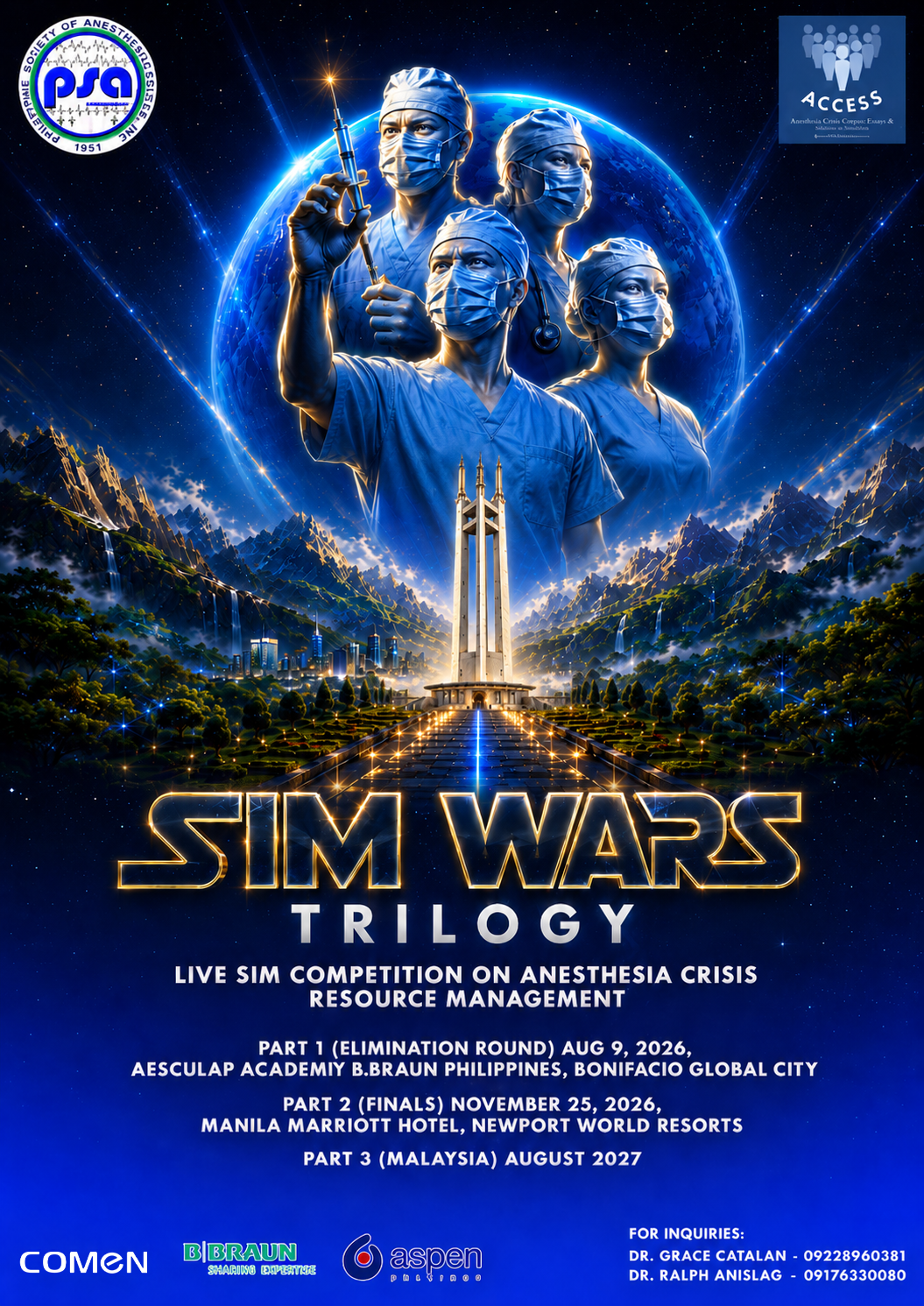
Live SIM Competition on Anesthesia Crisis Resource Management
A high-energy live simulation competition for anesthesiology training programs, built to test clinical reasoning, teamwork, resource management, and coordinated care under crisis conditions.
Registration deadline June 30, 2026
Simulation is an essential 21st-century tool for anesthesia education, allowing learners to practice cognitive, technical, and behavioral skills without risk to real patients. SIM WARS TRILOGY goes beyond trophies and rankings: it is intentionally designed to strengthen clinical reasoning, teamwork, and readiness for time-critical patient care.
Teams work through anesthesia crisis scenarios, recognizing key cues and making decisions as the situation evolves.
Participants clarify roles, share information, escalate concerns, and coordinate action in high-pressure moments.
Each scenario includes debriefing objectives that turn performance gaps into focused teaching and improvement points.
August 9, 2026
Aesculap Academy, B. Braun Philippines, Bonifacio Global CityNovember 25, 2026
Manila Marriott Hotel, Newport World ResortsAugust 2027
Malaysia station details to followFor the first registration and initial submission, teams only need to complete Sections 1, 2, 3, and 8 of the Simulation Scenario Worksheet. Sections 4, 5, 6, and 7 are not required at this stage. Scenario topics should center on Anesthesia Crisis Resource Management across anesthesia topics and subspecialties. AI-assisted scenario development is accepted, but citations must be included.
Scenario title, developer, brief case description, estimated scenario time, and estimated debriefing time.
Target learners, learner preparation, and simulation location.
Educational goal, up to 5 ACRM and medical objectives, case summary, and references.
This section is not required for the first registration submission.
This section is not required for the first registration submission.
This section is not required for the first registration submission.
This section is not required for the first registration submission.
Laboratory results, images, ideal or expected actions, actual performance, plus/delta or AI feedback, and follow-up teaching points.
Use this section to generate a detailed registration summary for coach and trainee review. Initial scenario submission only requires Worksheet Sections 1, 2, 3, and 8. Final registration and file submission should be completed through the official Google Form.
Initial submission: Sections 1, 2, 3, and 8 only.